Restaurant and bar insurance · Houston
The Power Is Out at Your Houston Restaurant. What Happens Next?
The walk-in is warming and somebody is going to ask whether insurance covers it. That is not one question. It is five, and they have different triggers.
A power outage is one event in the dining room and several events on an insurance policy.
The food may be unsafe. The walk-in may be damaged — or it may be in perfect working order and simply have no power, which is a different claim entirely. The failure may be on your premises or somewhere out in the utility system. You may lose stock, income, or both. And the health department may need to be notified, with approval required before food operations resume.
Those facts have to be separated quickly, and in that order. Food safety first. Coverage follows from the cause of loss and the actual form — not from the word “outage.”
First: decide whether operations have to stop
Houston’s food ordinance treats a power outage or extended interruption that may contaminate food, or prevent time and temperature controlled food from being held safely, as a potential imminent health hazard. The city generally directs an affected establishment to discontinue operations and notify the regulatory authority.
There are fact-specific alternatives — an unaffected area able to operate independently, or continued operation under an emergency preparedness plan the Bureau of Consumer Health Services has accepted, where the plan’s conditions are followed. Do not assume either pathway applies to you. Confirm it with the authority. And where operations are discontinued under the rule, the permit holder has to obtain approval before resuming.
Use the health department’s current emergency instructions and reporting route. Do not use an insurance article to decide whether food is safe or whether you may reopen.
Practical first steps:
- protect guests and employees;
- stop affected food operations;
- record when the outage began, and when each unit was last known to be at a safe temperature;
- keep refrigeration doors closed where it is safe to do so;
- follow the health authority’s instructions for evaluation and disposal;
- notify the carrier under the policy’s notice terms;
- preserve records before they disappear.
One caution on a figure you will meet everywhere: CDC guidance says a closed household refrigerator can keep food safe for up to four hours, and advises discarding specified perishables after that. That is consumer guidance for a home kitchen. A commercial restaurant follows its applicable food code, its accepted emergency plan, its actual product temperatures and the regulator’s instructions. The four-hour figure is not permission to serve inventory.
One outage, five insurance questions
1. Is the spoiled stock covered?
Spoilage coverage may respond to covered perishable stock after a qualifying change in temperature or humidity. Every word in that sentence is doing work — covered, stock, qualifying.
Check:
- which food and beverages meet the form’s definition of perishable stock;
- whether alcohol is included or treated separately;
- whether the trigger includes power interruption, equipment breakdown, contamination, or only some of those;
- whether an off-premises utility failure qualifies;
- whether a waiting period applies;
- the sublimit and the deductible;
- whether valuation is cost, selling price, or something else;
- what documentation and disposal process the carrier requires.
“Spoilage included” on a proposal answers none of those.
2. What happened to the refrigeration equipment itself?
A compressor that suffered an accidental mechanical or electrical breakdown is a different question from a healthy cooler that stopped because the building lost power.
Equipment-breakdown coverage may respond to qualifying accidental breakdown of covered equipment. Wear, corrosion, deterioration and poor maintenance are commonly limited or excluded. A technician’s diagnosis can therefore matter as much as the fact that the box was warm.
Preserve failed parts if the carrier or adjuster asks, and get a written report explaining what failed and why. Do not authorize non-emergency disposal of the evidence before asking what the claim process needs.
3. Did the failure happen away from the restaurant?
If your equipment is intact and power failed elsewhere, utility-services wording becomes the centre of the question. Policies distinguish between damage to specified utility property, the type of service, where that property sits, whether overhead transmission lines are included, and interruption as against direct damage.
Before renewal, ask:
- Does the extension include off-premises power failure?
- Must physical damage occur to utility property?
- Which causes of loss qualify?
- Are overhead transmission or distribution lines excluded?
- Does the extension apply to property, to business income, or to both?
- What waiting period and limit apply?
An outage map establishes that service stopped. It does not establish that the policy’s trigger occurred.
4. Is lost income covered while you are closed?
Business income generally requires the trigger stated in the policy — commonly direct physical loss or damage from a covered cause at a described location. Utility-service, civil-authority and contamination extensions each carry their own triggers, waiting periods, distances and limits.
TDI’s own guidance on business interruption makes the same point: payment depends on a covered property loss and on the policy wording, and a utility loss away from the premises is commonly outside an unendorsed answer.
The income calculation is a separate matter from the trigger. Where coverage does apply, the claim may consider lost net income, continuing expenses and necessary extra expense during the defined restoration period. Sales history, reservations, payroll, food cost, seasonality and the actual reopening steps all feed it.
Keep daily records. A restaurant that reopens on a limited menu, buys ice, rents refrigeration, transfers stock or pays overtime may have extra expense long after the doors are technically open. The business interruption page covers the general trigger and the calculation; this article owns the outage chain.
5. Did it become a contamination or public-health event?
Spoiled stock is not automatically a food-contamination or recall event. A policy may treat disposal, testing, cleaning, public communication, medical testing, product withdrawal or an authority-ordered closure in a separate endorsement, with its own definitions and its own sublimit.
If anyone alleges illness, preserve the incident facts and report them immediately through the current carrier’s required route — that is a general liability question as well as a property one. Do not put customer health information, employee details or incident narratives into a web form.
What to document while it is happening
The best claim file is built during the event, not reconstructed afterwards.
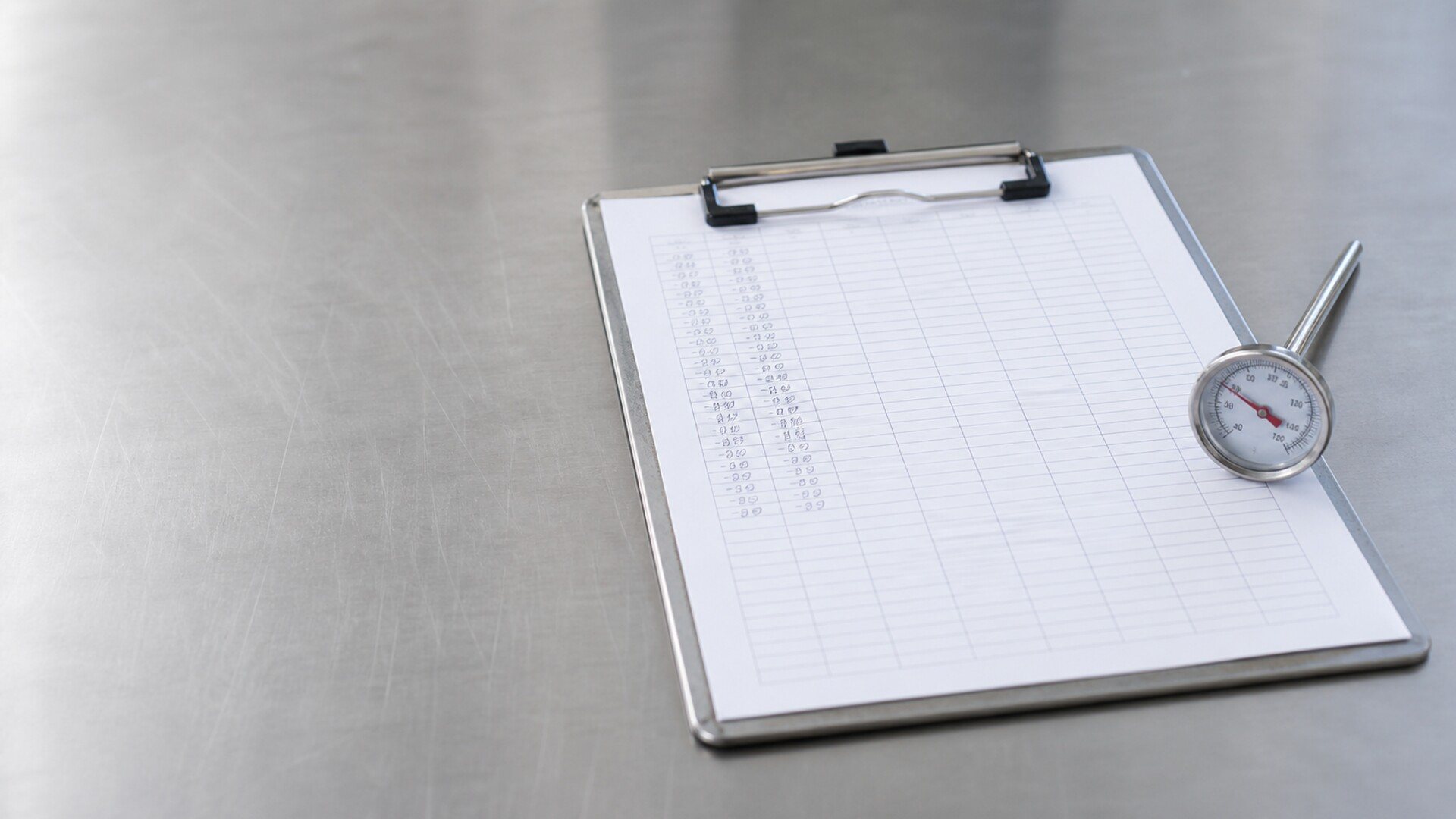
Time and temperature. Outage start and restoration times; thermometer and data-logger readings; when each cooler or freezer was last opened; when food was moved, iced, evaluated or discarded; the health authority’s instructions and reopening approval.
Stock. Item, quantity and unit cost; purchase invoices and inventory reports; photographs or video before disposal where safe and permitted; disposal records; salvage or donation records if authorized; alcohol inventory kept separate from food where it matters.
Cause. Utility notices and outage maps; electrician or refrigeration technician reports; photographs of damaged equipment; alarm or building-management records; service and maintenance history.
Income and extra expense. POS sales by day against comparable prior periods; reservations, catering orders and cancellations; payroll and continuing expenses; invoices for ice, rental refrigeration, generators, transfer, cleaning or expedited repair; the dates and capacity of partial and full reopening.
Follow the carrier’s instructions throughout. Where health obligations require disposal before an adjuster can attend, document what you safely can and ask how the insurer wants the loss preserved. Our file a claim page has the reporting routes.
What not to do
- Do not taste food to decide whether it is safe.
- Do not continue affected operations because the freezer still feels cold.
- Do not assume a generator makes every operation safe or code-compliant.
- Do not discard the records along with the stock.
- Do not describe every consequence as “equipment breakdown.”
- Do not promise employees or customers that insurance will pay before the carrier has determined coverage.
- Do not reopen until the responsible health authority confirms any required approval is satisfied.
Before the next one: trace the scenario on the policy
At renewal, walk this exact event through the forms:
Power fails away from the premises during Friday dinner. The walk-in warms, food has to be discarded, the health department requires closure, emergency refrigeration is rented, and the restaurant reopens on a limited menu two days later.
Then find the answer for each consequence in turn:
- spoiled stock;
- the refrigeration and electrical equipment;
- off-premises utility service;
- lost income;
- extra expense;
- contamination response;
- authority-driven closure.
Record the limit, the waiting period, the deductible and the key exclusion for each. Where the answer is “not covered,” at least it has become a deliberate risk-financing decision instead of a discovery made on a Saturday morning.
That exercise belongs next to the operational preparation — temperature logs, tested alarms, emergency contacts, a safe generator plan where permitted, alternate cold storage, vendor contacts, and a written closure and reopening procedure. It also belongs in the quote itself: spoilage, equipment breakdown and utility services are three of the fifteen inputs behind a restaurant premium, and they are among the easiest to leave out of a submission by accident.
If the outage is happening right now
Use the health department’s current emergency route, follow the food-safety instructions, and report the loss to your current carrier under its notice terms. Moon can help existing clients find carrier claim information and review the policy once the immediate safety steps are underway.
For a future renewal, bring the scenario to the desk in Houston with the refrigeration setup, the peak stock value and the renewal date. Tracing it on paper takes an afternoon. Tracing it during an outage takes considerably longer.
Common questions
Does restaurant insurance cover food spoiled in a power outage?
It can, but not every outage or stock loss qualifies. The form may require a specified cause, covered equipment or a covered utility failure, and may apply a sublimit, a deductible or a waiting period. Read the spoilage, utility-services and equipment-breakdown provisions together rather than one at a time.
Is an off-premises utility outage covered?
Not automatically. Some policies offer utility-services coverage, but the covered service, the property that must be damaged, the qualifying causes of loss, the treatment of overhead transmission lines, the waiting period and the limits all vary. Confirm whether the extension reaches stock, property damage, business income, or some combination.
Will business interruption pay whenever the restaurant closes?
No. It generally requires the policy's stated trigger — commonly direct physical loss or damage from a covered cause at a described location. An ordinary outage, a covered utility interruption, a contamination closure and a civil-authority order each have different requirements.
Does equipment breakdown coverage include the spoiled food?
Not automatically. Damage to the machine and damage to the stock can be two separate coverages with separate limits. Both have to be checked, and a technician's written diagnosis of what failed and why often matters as much as the fact that the box was warm.
Can a Houston restaurant reopen as soon as power returns?
Not necessarily. Food temperatures, water, equipment and sanitation have to be safe, and Houston requires approval before resuming operations where an establishment discontinued under the imminent-health-hazard rule. Follow the health department's current instructions rather than an insurance article.
Should I throw the food out before the adjuster sees it?
Health and safety obligations come first and can require disposal before anyone arrives. Document what you safely can — photographs, invoices, inventory counts, temperature readings, disposal records — and ask the carrier how it wants the loss evidenced. Do not delay safe disposal to preserve evidence.
Sources: Texas DSHS — reopening a retail food establishment after an emergency; TDI — business interruption coverage; TDI — commercial insurance for businesses; CDC — keep food safe after an emergency. Verified .
General information about Texas filing rules, not legal advice and not a quote. Requirements change; confirm your own through the Texas DPS License Eligibility system before acting. Published .
Next step
If a loss is happening right now, this is not the place to start — follow the health department's instructions and report the loss to your current carrier under its notice terms. For a renewal review, Moon Insurance has worked from an office on FM 1959 in southeast Houston since 1985 and this scenario is worth tracing on paper before it happens. Start with high-level facts: what the refrigeration setup is, roughly what peak stock is worth, and the renewal date. Ask for an approved transfer route before sending property forms, endorsements, equipment schedules or financial records.
We ask for a driver license number only when you tell us your enquiry is about an SR-22, and only because it lets us quote from your record instead of calling you for it. We never ask for a photo of your license, a Social Security number, or payment details through this website.
From the library
- Commercial insurance13 min readWhat Business Insurance Costs in Texas, Line by Line"Business insurance" is not one price, it is six or seven separate decisions that arrive on one invoice. Which is why the averages are useless and why two quotes for the same business can differ by half without either one being wrong.
- Commercial insurance13 min readWhat Changes Commercial Truck Insurance Cost in Texas — and What the Rules RequireEvery published figure for what commercial truck insurance costs describes a population you are not in. What is worth knowing instead: which parts of the number somebody else has already decided, which parts your operation decides, and how to tell whether two proposals are even quoting the same risk.
- Commercial insurance11 min readWhat Errors and Omissions Insurance Costs — and What the Price Is Actually BuyingTwo E&O quotes can differ by half and describe the same business, because most of what you are paying for is the shape of the policy rather than the size of the firm. The retroactive date is the part that decides it, and it is the part nobody reads.